What happens to me?
You tell the story behind an ability no résumé has captured.
Florida’s inaugural Lived Experience Career Expo
Be valued for what your experience has taught you to do.
Early 2027 · South Florida
Florida had 427,000 open jobs in December 2025. The people who can fill them may already be here—carrying capabilities no résumé records.
Employers tell us they need people who care, make good decisions when the plan falls apart, and step forward when someone needs them.
Many people have practiced those things for years—holding a family together, helping run a business, or finding a way forward when there wasn’t an easy one. They just haven’t had a way to show what those experiences taught them.
We’re bringing them into the same room so people can say, “Here’s what I learned. Here’s how I make decisions. Here’s what I can bring.”—and employers can see the judgment a particular role actually asks for.
Some of the leaders we need have been leading for years. They just haven’t had the title.
Why start in Florida? Because this state was built by people starting over—and its hiring systems still cannot see most of what those people can do.
Early 2027 · South Florida
This is the gathering we’re building toward: people sharing what life taught them, employers bringing real roles, and people from different fields working through ideas together. Not just talking about what could change—putting it into practice.
Why attend
People bring what life taught them. Employers bring real roles. Partners bring the communities and questions that can move this work forward.
Request an invitation. Selected individuals complete the assessment; employers complete an intake form and attend a workshop with us.
Talk about a decision you had to make, what you noticed, and what you did next. Hear how people in other fields handled a similar moment.
Work with people from different fields to name what a role needs and build a way to recognize it.
Meet around real openings. Employers interview the candidates they approve for their shortlist and decide who to hire.
Take what we learn into development, research, or a 90-day test we agree to work on together.
Hiring is part of the purpose. Seeking a job is your choice. Interviews do not guarantee an offer; employers make every hiring decision.
The uncomfortable truth
The newcomer asked to start at the bottom after fifteen years of real work. The longtime Floridian whose judgment is trusted on every shift and appears nowhere on paper. They are not the exception here—they are the workforce.
The experience at the center
Drop your armor. Share the defining moments that built how you walk through the world. Let employers recognize where those moments are exactly what they need.
We each walk through the world carrying stories the systems around us do not understand. We learn to wear armor because the defining moments that shaped us rarely fit inside an application or interview. But inside that messiness, we build hidden abilities—how we solve problems, hold steady, earn trust, and move through the world. This is the room where those abilities come to light.
You tell the story behind an ability no résumé has captured.
Employers ask about the decisions you made and where that judgment could matter in their sector and role.
Employers with openings, people working in other industries, and people building or studying a better way to recognize capability.
This is not a career fair built around polished pitches and stacks of résumés. It is a room where people name what life taught them, employers name what their work truly requires, and both sides can recognize a match differently.
What someone has lived is evidence to explore, never a capability or leadership label assigned because of where they come from.
The translation
Employers are not hiring a biography. They are looking for what an experience helped someone learn to do. These are the moments both sides can talk about.
Experience someone brings
What an employer could look for
Noticing when someone needs help, adapting their approach, and following through.
Balancing customer needs, limited resources, and competing priorities.
Deciding what matters first, coordinating others, and knowing when to ask for help.
The decisions a person made and what they did next establish the evidence—that is what makes an experience something an employer can recognize and ask about.
One illustrative Judgment Map, at a glance
Built through real work
Real-world student-support implementation through Jump Start Tutoring.
Research, assessment, and outcome analysis through Vero Learning.
Relationships spanning education, workforce development, and frontline employment.
From recognition to real opportunity
We want what happens in this room to lead somewhere. People bring what they’ve learned; employers bring real openings and someone who can make hiring decisions. Together, we explore where that experience could matter in the work. You can take part in the full gathering without seeking a job.
If you’re selected, you’ll get a private invitation to take the Vero Lived Experience Assessment before the Expo. You keep your own Decision Profile at no cost—matched or not. You don’t have to be looking for a job to come. You’ll meet employers, and you decide whether anyone sees your profile. If you are looking for work, you can also choose Opportunity Matching.
Employers do the work too. Every participating employer completes an intake form and joins a workshop with us. Bring one real role you need to fill and someone who helps make hiring decisions. Together, we learn the framework underneath it all: what someone noticed, what they decided, what they did, and what happened next. Then you use those decision patterns to shape your interview questions. Where we’ve calibrated against your role, we can prepare a role-specific shortlist. Where we haven’t yet, we offer early alignment and introductions. You interview the candidates you approve, and you make every hiring decision.
On Saturday, interviews happen in the late morning and early afternoon—while people still have energy. Everyone an employer approves for a real opening gets invited to interview, at no cost. We want those interviews to turn into hires. An interview isn’t a promise of a job, and asking for matching doesn’t guarantee a spot on a shortlist. And you never need matching to be part of the Expo.
Included with the Expo
Begin with one role, one consequential decision, and one measurable outcome. Employers identify what the work requires; participants bring assessment evidence and the decisions behind their experience.
Here’s how it comes together. Vero looks at what the employer says the role needs alongside each person’s assessment evidence. The candidate always keeps their Decision Profile. Only with their permission does a hiring manager see a private report on how they line up with the role. When we’ve calibrated against that employer’s role, that can become a shortlist. Until then, it’s an early read—not a ranking and not a verdict. The employer decides who to hire.
Workforce organizations, community colleges, and universities: if you want to bring the people you support, reach out through the invitation form and tell us about your community. Employers: if you have a real role to fill and can bring someone involved in hiring, reach out through the same form. We’ll follow up to discuss participation.
Request an InvitationA match is not a verdict. It is a better conversation to test.
Why this starts in Florida
Florida runs on people its systems cannot read. The newcomer who managed teams for fifteen years and is asked to start at the bottom. The longtime Floridian whose judgment is trusted on every shift and appears nowhere on paper. The military spouse starting over. The kid who learned business at the family register.
They are not the exception here—they are the workforce. This state was built through arrival, reinvention, rebuilding, and starting again. Yet our schools, employers, and workforce systems still measure people by paperwork that records almost none of it.
Florida's economy depends on capability its institutions were never designed to see. That problem is specific, local, and solvable—which is why the work begins here.
Newcomers restarting careers, longtime residents whose experience outruns their résumés, career changers with no credential for what they already know—Florida is full of people whose capability exists long before any system records it.
Hospitality, healthcare, logistics, construction, retail, and education depend on judgment that no transcript or résumé captures, in a labor market that is always hiring and always searching.
Districts, colleges, employers, and workforce organizations in South Florida serve overlapping populations in a compact region. The handoffs between them are short enough to redesign.
Miami was built by people who risked everything to begin again—and by the capital and companies that followed them. Yet the same judgment that built fortunes here goes unrecognized the moment it lacks the right paperwork.
The measurement gap
Our systems record placement—whether someone received a paycheck within ninety days. They rarely measure whether that person stayed, performed, advanced, or led.
Placement is not the finish line. Whether people stay, grow, and lead is a capability question—and it is the question this initiative exists to answer.
The point of truth
Part of Florida’s hiring challenge is recognizing the capabilities people already bring. Florida has held hundreds of thousands of open roles month after month while capable adults stand outside the labor market entirely. The two do not move toward each other, because the instruments used to read people cannot see what those people carry.
427,000
job openings in Florida in December 2025.
U.S. Bureau of Labor Statistics, State Job Openings and Labor Turnover, December 2025
Month after month
Florida carried hundreds of thousands of open roles throughout 2025. This is not a seasonal spike. It is a standing gap.
The people who can close an enduring gap are rarely the people the system was built to read. They arrived with a career already behind them, learned under pressure rather than in a classroom, or hold a strongest qualification that has never appeared on a document. Lived experience is not a consolation category. In a market this tight, it is the available supply.
The uncomfortable truth
“One human being. Seen by multiple institutions. Partially measured by all of them. Fully understood by none.”
Records
Grades, attendance, assessments
May miss
Recovery, curiosity, adaptability, trust-building
Records
Credits, credentials, completion
May miss
Agency, applied judgment, problem-solving under uncertainty
Records
Résumé, interview, prior titles
May miss
Transferable decisions and capability built outside conventional work
Records
Productivity, compliance, customer or student outcomes
May miss
What the person noticed, prioritized, protected, and adapted
Records
Promotions, targets, team results
May miss
How judgment developed and whether it transfers to others
Where does the signal disappear as a person moves from one institution to the next?
What we are building
Our vision is to make Florida the first place where human capability is identified early, developed intentionally, connected to opportunity, and validated through real outcomes.
The initiative will bring together the institutions that educate people, employ them, study them, and support their movement into opportunity.
This work is launching first in South Florida because the relationships, operating environments, and early evidence already exist here.
Recognize capability that conventional proxies miss.
Help people strengthen judgment through experience, reflection, and feedback.
Carry meaningful capability signals into education and employment opportunities.
Test those signals against student, workforce, and organizational outcomes.
The larger work
The Expo is where we begin putting this into practice together. What we learn from the conversations, the maps we build, and the hiring decisions can help us decide what to test next.
The Florida Human Capability Initiative is our effort to build a shared way for schools, colleges, employers, workforce organizations, and policymakers to recognize the capabilities people develop through what they have lived—and carry those capabilities into real opportunity.
We are not beginning in Washington with a theory. We are beginning in Florida with real people, real employers, and real decisions. If we can prove a better way to see and develop human capability here, we can take what works across Florida—and eventually to the national stage.
The first operating case
Florida school systems need more capable adults supporting students. Many may already live in their communities, but résumés and traditional credentials do not fully reveal who can build trust, adapt when a lesson fails, exercise sound judgment, and remain dependable when conditions change.
Jump Start Tutoring is demonstrating how those capabilities can be recognized, developed, and strengthened through real work with students.
Tutoring gives the initiative a tangible place to begin. But the underlying challenge is not limited to schools. Frontline professionals across sectors also make consequential decisions that conventional systems struggle to see.
Tutoring is the proof case. Human capability is the larger question.
Across the table
The gathering will bring together people who encounter human capability at different stages—and rarely have the opportunity to examine it together.
Superintendents, district leaders, principals, teachers, tutors, student-support leaders
College leaders, career-services teams, workforce organizations, economic-mobility leaders
Frontline executives, human-resources leaders, operational leaders, managers
Founders, operators, and investors building companies in South Florida who need frontline talent they can actually recognize
Researchers, evaluators, behavioral scientists, institutional partners
State legislators, members of Congress, candidates for office, and economic-development leaders deciding what Florida's next economy is built on
Students, tutors, early-career workers, newcomers, and frontline employees whose lived experience is usually discussed without them in the room
Potential voices may include leaders from South Florida school systems, colleges, employers, research institutions, and workforce organizations.
The work that led here
An interview series from The Lived Experience Report.
Through conversations with employers, educators, builders, researchers, and people whose capabilities were overlooked, Dropping Our Armor examines the defining moments that shape how people decide, adapt, build trust, and perform when the script disappears.
The Lived Experience Report explores the questions that led to this Expo: what does a system see when it looks at a human being—and what does it walk past?
Dropping Our Armor is now underway—with more leaders to come.
Read and subscribe to The Lived Experience Report
The story behind Lived Capital: how a tutoring company came to believe that capability is not the same thing as a credential.
Read the issueWhy the same brand runs smoothly in one region and burns down in another—and what more dashboards failed to fix.
Read the issueElliott Haden of Accenture on learning, performance, and AI: “All data is learning data”—and why curiosity is what separates people now.
Read the issueShe started as a high school math teacher, then built a 31-year career in retail at Office Depot. What the classroom taught her about leading people—long before the title.
Read the issueThe Expo brings these questions into the room. We’ll work through them together—and see what they mean when someone has a real role to fill.
Proposed Friday evening + Saturday program
Final dates will be confirmed with invited participants.
Friday is for meeting each other and beginning the conversation. Saturday is for applying the framework, interviewing, and deciding what we want to build or test next.
The framework we carry through the gathering
Experience → Signal noticed → Decision → Behavior → Capability → Outcome
One shared sequence, used the same way whether the room is examining a student, a shift, a handoff, or a hiring decision.
Friday evening — connect & begin
Meet people from different fields and hear why they came. Start with conversation, not a round of presentations.
Drop your armor. Those who choose to share can name a defining moment and what it taught them. Listen for the decisions behind the story.
A brief introduction to the framework through one person’s journey: what schools, employers, and other institutions see—and what disappears between them.
Begin a shared map with people from different sides of the table. Choose one question to return to in the morning, rather than trying to finish the work tonight.
“What did your institution know about this person, and what could it not yet see?”
Saturday — apply, interview & build
Start of the day
Reconnect over breakfast and bring back the question your group carried from the evening. A short recap gets us ready to work—not a second introduction.
Morning — applied workshop
Start with the tutoring proof case, then apply the same framework to healthcare, retail, logistics, and other frontline roles. Trace what someone noticed, decided, and did—and connect recurring decision patterns to capabilities and outcomes. Map what gets lost in the handoff between institutions.
Experience → Signal noticed → Decision → Behavior → Capability → Outcome
Output
Student-Support and Cross-Frontline Judgment Maps; an Institutional Signal Gap Map
Late morning into early afternoon — parallel working time
Protect time for scheduled interviews and role conversations while people still have energy. Alongside them, participants not interviewing explore research questions, institutional handoffs, and possible shared work. Interview appointments leave room to join the other conversations.
Output
Hiring next steps and questions to bring into the Design Lab
Afternoon — focused Design Lab
Come back together for a shorter lab. Choose one of the Questions Florida Should Test Together and turn it into a draft plan around one population or role, one consequential decision, and one measurable outcome.
Output
Questions Florida Should Test Together and one draft Shared Work Blueprint per participating organization
Closing reception
Reconnect, share voluntary reflections on what changed your thinking, and hear what others want to carry forward. People interested in a future cohort, research, or shared work can raise their hand for a follow-up conversation.
Output
A closing reflection and optional interest in continuing—not cohort enrollment or permission to share information
Research questions the room may test
Inside every Shared Work Blueprint
Each participating organization drafts:
And one name: who must join the next working meeting.
Further research, shared work, or a future cohort requires a separate conversation about scope and permissions. Expressing interest does not enroll anyone.
What participants leave with
Your own Decision Profile after completing the privately invited assessment, whether or not matched; a personal Judgment Map; and connections with participating employers. Employer-approved shortlisted candidates receive an interview invitation at no cost. Full WorkforceOS access is planned; availability will be confirmed privately.
A role-specific Judgment Map and interview questions grounded in the decisions the work requires. Where calibrated benchmarks exist, role-specific shortlists; otherwise, preliminary alignment and curated introductions. Private role-alignment reports require participant permission. Your organization makes every hiring decision.
A draft Shared Work Blueprint: one population or role, one consequential decision, observable signals, a measurable outcome, and a proposed 90-day test. Leave with a clearer question and who needs to join the next conversation. Any research or further engagement is scoped and agreed separately.
A personal Lived Experience Judgment Map
Florida’s Fragmented Capability Journey
A role-specific Judgment Map
An Institutional Signal Gap Map
Questions Florida Should Test Together
A 90-Day Shared Work Blueprint
A post-event field note capturing what the gathering learned
What happens next
If you want to keep going, we can choose one role, one decision, and one outcome to work on together. That might mean research, learning from how your current employees work, or an agreed 90-day test. We decide the scope and permissions separately. One gathering cannot tell us what works—we have to follow what happens afterward.
Participants receive a field note capturing the patterns, questions, and possibilities surfaced by the room. Participants also retain access to their approved Judgment Map and their own Decision Profile after completing the assessment.
Participating employers communicate whether an introduced participant will move to a formal next step.
Interested organizations enter a focused working conversation around one role, population, outcome, or institutional handoff.
Selected organizations may begin a defined implementation, research study, or shared-work experiment. With appropriate permission, Vero follows interviews, hires, and 30-, 60-, and 90-day outcomes.
Bring your organization
If the work above is something you want your organization part of, there’s a way to do more than attend. We’re not looking for logos on a banner. We’re looking for organizations that want to help build this—and see their own roles more clearly along the way.
What sponsors get:
Learn what your best people do differently—and use it to shape how you interview. Over time, that’s how matching gets sharper.
First look is a head start, not a hold. Every candidate still decides who sees their profile, can say no, and can talk with other employers.
Your people stay in control. Taking part is their choice. Each person keeps their own Decision Profile. You see overall patterns unless someone agrees to share more.
Sponsors bringing roles to fill also complete the employer intake form. We’ll walk through the details together.
Request an InvitationIn the form, choose “Sponsor.”
The format
The convenor
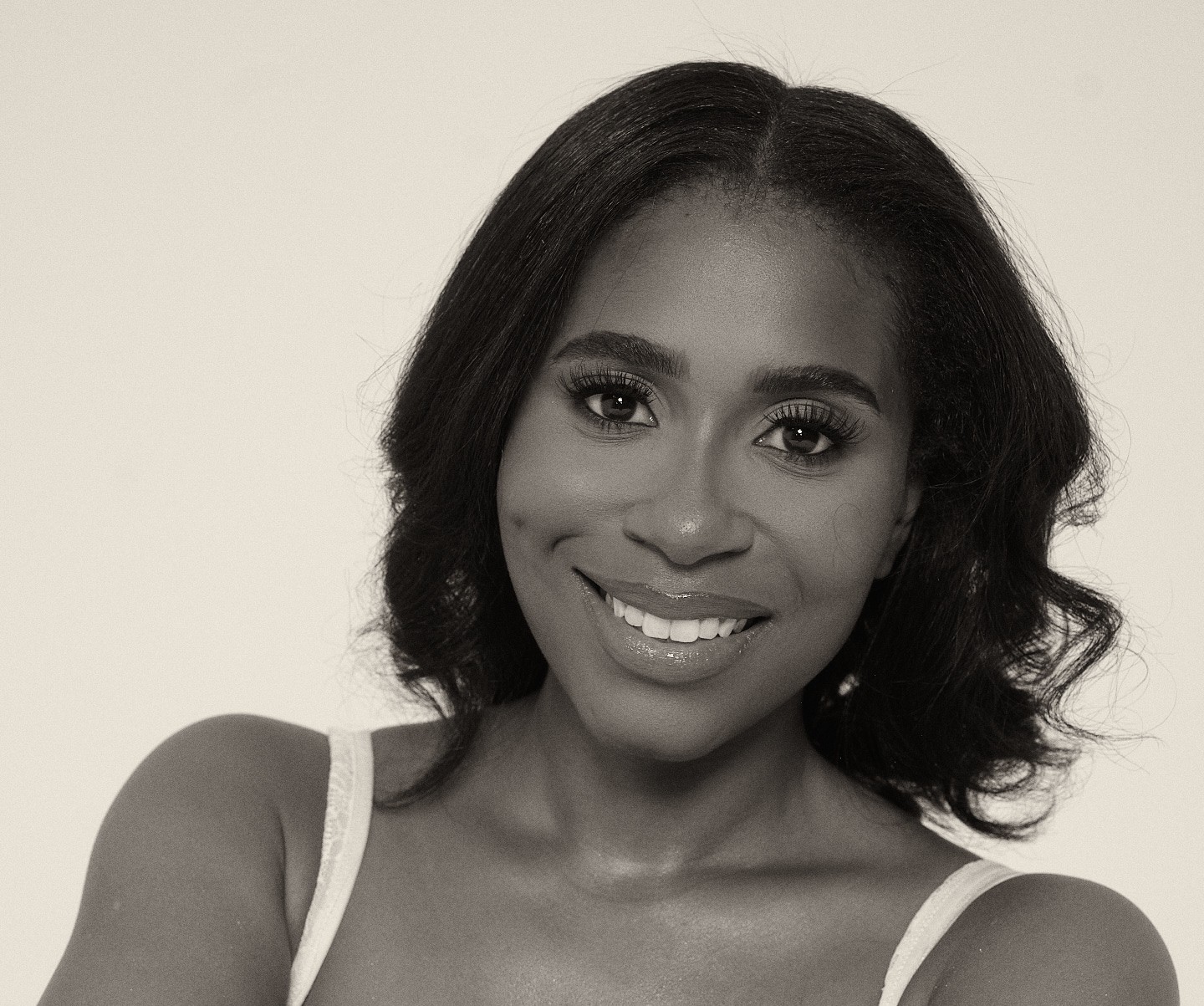
Chrissybil “Sybil” Boulin was born in New York and spent her summers in Haiti—a childhood split between the world’s wealthiest nation and a country still rebuilding its foundation. In New York, she watched her single mother organize susus—community lending circles—to pay for Catholic school. In Haiti, she watched kids repair broken street phones that big tech stores couldn’t fix, and neighbors organize food distribution after disasters before formal aid ever showed up.
From a young age, she learned that value doesn’t always look like money or degrees. Sometimes it looks like resilience, creativity, and people solving impossible problems with almost no resources.
She worked her way to the University of Cambridge, then turned down the “serious” policy path for measurable impact now. She founded Jump Start Tutoring with $500—no co-founder, no investor—on the belief that kids overlooked on paper can outperform everyone’s expectations. It became a government-contracted education company working alongside families, schools, and districts across South Florida, and proved something deeper: human potential is predictable, if you know what to measure.
She later founded Vero Learning to make the judgment built through lived experience visible—and to connect that intelligence to hiring, development, mobility, and frontline performance.
“What began as a tutoring problem revealed itself as a human-capability infrastructure problem.”
She is not building a think tank. She is freeing capability that institutions were never designed to see—one person, one employer, one defining moment at a time.
Convened by Jump Start Tutoring and Vero Learning
Before you request an invitation
No. It adds you to the interest list for updates and participation next steps. Participation is curated; requesting an invitation does not confirm a seat, authorize profile sharing, or enroll you in matching.
Requesting an invitation is free. Selected individual participants receive their Decision Profile at no cost after completing the assessment. Any other attendance costs, if applicable, will be explained before you commit.
Request an invitation
Talent, employers, sponsors, workforce organizations, colleges, universities, researchers, and community partners can raise their hand now. Requesting an invitation is free and does not confirm attendance.
We’re planning full WorkforceOS access for selected participants: career exploration across eight sectors, a journal, maps, development tools, and nearby job openings. We’ll confirm what’s available privately before you commit. Visiting an employer’s application page is not the same as applying. You choose whether to share your profile with each employer, allow a hiring-manager report, or let us follow what happens afterward.
The request and selected-participant Decision Profile are free. Any other attendance costs, if applicable, will be explained before you commit.
The next step is bringing the people who educate, employ, study, and support Florida’s talent around one table—and building a better way to see it together.